📝 Modified Stationery
HIGH RISK
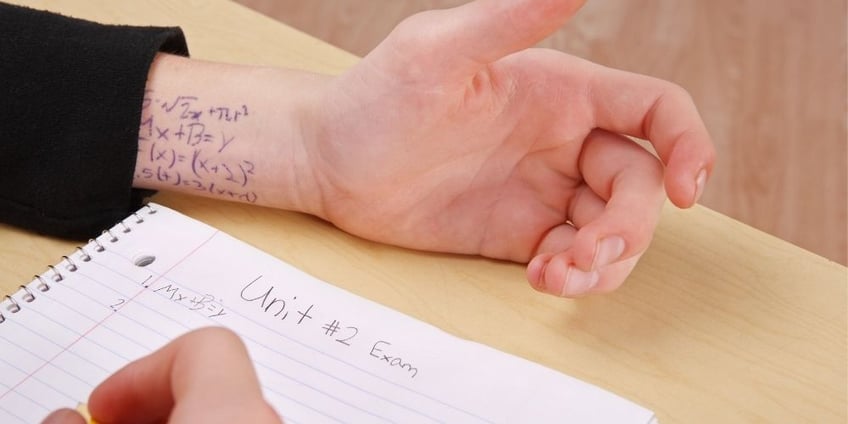
Examples: Fake water bottle labels with formulas, pens with hidden scrolls, calculators storing notes, pencil cases with printed formulas.
🚫 Why They Fail:
- Easily spotted during inspections
- Unusual items are red flags for invigilators
- Random bag checks expose hidden materials
- Modern exam halls have strict item restrictions
⌚ Wearable Tech
EXTREME RISK

Examples: Smartwatches, smart rings, glasses with hidden cameras, wireless earpieces.
🚫 Why They Fail:
- Most exams ban all watches and electronic devices
- Metal detectors detect hidden electronics
- RF scanners detect wireless signals
- Signal jammers block all communications
📱 Phone-Based Tools
EXTREME RISK

Examples: Smartphones strapped to body, AI apps, recorded notes, camera phones.
🚫 Why They Fail:
- Phones are completely banned in exam halls
- Metal detectors and body scanners
- Any notification sound exposes you instantly
- Severe penalties including exam disqualification
💻 Online Exam "Helpers"
EXTREME RISKExamples: Screen-sharing software, remote desktop control, second devices off-camera, AI writing tools.
🚫 Why They Fail:
- Advanced proctoring software detects extra devices
- Eye movement tracking reveals off-screen looking
- Keystroke analysis detects unusual typing patterns
- Browser lockdown prevents other applications
🔬 Micro Devices
EXTREME RISK
Examples: Tiny audio transmitters, miniature Bluetooth earbuds, camera pens, micro receivers.
🚫 Why They Fail:
- Trained invigilators spot suspicious behavior
- RF signal blockers make devices useless
- Regular ear inspections in high-stakes exams
- Advanced metal detection technology
👥 Human-Assisted Cheating
EXTREME RISK

Examples: Paid test takers, cough/tap codes, whispering answers, hand signals.
🚫 Why They Fail:
- Strict ID verification with biometrics
- Multiple camera surveillance from all angles
- Trained supervisors monitor all communications
- Severe legal consequences for impersonation


